Behavior Briefs
Home > Behavior Briefs > When Students Struggle to Follow Directions
When Students Struggle to Follow Directions
Practical strategies to understand noncompliance, strengthen relationships, and help students meet expectations.
Now that you’ve been with your students for a few weeks, you may be noticing a student or group of students who frequently struggle to follow adult directions. This is an important time to reflect on possible reasons that students may be failing to comply and to use logic and problem-solving to consider what alterations are most likely to make a difference in helping the student(s) meet expectations.
While refusal to comply with a reasonable adult request should be viewed as a serious misbehavior, it is not always necessary to put a complex plan in place. Consider small but meaningful strategies as outlined below.
Provide clear, consistent directions.
Ensure that any directions you give are clear and relate to observable behaviors (things you can actually see or hear). Deliver all directions in a calm and businesslike manner, and focus on what you want the student to do rather than what you want them to stop: “Sydney, please sit in your assigned seat, then open your book to page 75,” rather than “Stop wandering around and wasting time.” It may also be helpful to focus on simple one-step directions instead of giving multiple steps at one time: “Sydney, please sit in your assigned seat.” When the student has met that expectation, deliver the next: “Thank you. Now, open your book to page 75.”
Explicitly teach expectations for activities, transitions, and skills.
Reflect on whether you have adequately taught expectations for activities, transitions, and skills. With some students, what looks like willful refusal to comply can actually be because they don’t understand expectations or because they are struggling to keep track of different expectations throughout the day. Students encounter hundreds of different expectations in a single school day as they move to different environments, teachers, and common area supervisors. Some students or groups will require more active teaching and practice opportunities to be able to master all of the different expectations throughout their day.
Consider One or More Structured Interventions
If a student continues to struggle after these efforts, it may be necessary to put a more structured plan in place. Some possibilities that may be helpful include:
- Hold a planned discussion at a neutral time to share your concerns, get the student’s perspective on why they are not following directions, and collaboratively problem solve solutions. See Early-Stage Interventions for steps for conducting a planned discussion.
- Increase the student’s sense of power and responsibility through a meaningful job within the school or class, especially during or directly before times or activities in which the student typically struggles. This can give them a sense of purpose and positive power, and increase their positive connection with the school or teacher.
- Conduct lessons at a separate time from when the student struggles to teach the student how to respond appropriately to directions and/or how and when to appropriately self-advocate. Have the student practice responding to a variety of directions in appropriate ways. Some students have a knee-jerk reaction to respond defiantly. Intervention must teach them appropriate ways to respond to and carry out directions as well as communicate when they don’t understand a direction or need to voice concerns or questions.
- Implement a system for monitoring the student’s frequency of appropriately following directions. Have the student graph and use goal setting to reduce instances of not following directions and increase instances of following directions. For older students (upper elementary through high school), it may be especially beneficial for the student to self-monitor with a tallying form on the desk to help them become more aware of when they are responding appropriately or inappropriately. Here is a tally form you can use.
- Optionally, you might add a structured reinforcement system to the monitoring of the student’s rate of following directions. Consider whether earning points toward a desired activity for increasing directions followed might give the student a boost in the initial stages of working on following directions.
For step-by-step sample intervention plans to address noncompliance, see the Encyclopedia of Behavior Intervention.
While noncompliance can be a frustrating behavior to manage, work to maintain a sense of calm, belief in the student’s ability to change the behavior across time, and willingness to continue problem-solving and trying reasonable approaches to help the student succeed.
If you would like to explore professional development options for this content, contact us at info@safeandcivilschools.com.
Jessica Sprick
Safe & Civil Schools
Resources mentioned in this Behavior Brief:
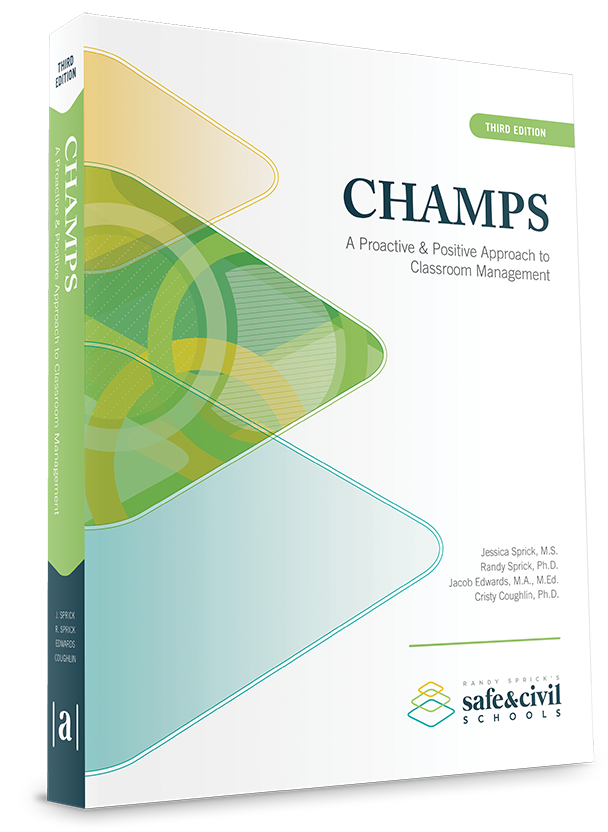
Student misbehavior has always been the leading cause of teacher frustration. CHAMPS empowers teachers to improve student behavior and motivation by creating classrooms where all students can thrive.

A set of simple, teacher-friendly interventions to use as a starting place in addressing an individual student’s chronic misbehavior— disrespect, noncompliance, lack of motivation, bullying, and more.
Encyclopedia of Behavior Intervention (3rd ed.)
Even with a solid classroom management plan in place, some misbehavior is bound to happen. Fortunately, teachers and other educators can implement simple interventions without the help of a specialist to reduce problem behavior.